
The indoor playground industry has evolved dramatically. Today’s parents are no longer satisfied with a simple “ball pit”—they are seeking premium, hygienic, and highly engaging Family Entertainment Centers (FECs) where children can burn off energy while adults relax comfortably.
Whether you are planning a mid-sized community play center or a massive comprehensive amusement hub, simply renting a space is not enough to guarantee success. You need a bulletproof business strategy. Here is your step-by-step master guide.
Step 1: Define Your Target Demographic & Conduct Deep Market Research
Identifying your core audience is the first step of your investment. The target age group directly dictates your venue’s traffic flow and equipment selection. Keep this golden business rule in mind: trying to “serve everyone” often means serving no one well. Pinpointing your exact target demographic is the starting point of a profitable playground.
- Gauge Audience Size: Understand key local demographics, including the number of households and young children in your target radius. Gathering data through online surveys or community polls is an excellent way to assess the actual demand for an indoor playground in your area.
- Analyze Core Age Groups: Dive deep into the age distribution of children (ages 0-12) in your target community. This directly determines what age-appropriate equipment you should purchase. For instance, a toddler-heavy neighborhood requires highly aesthetic soft play areas, whereas communities with older kids demand thrilling ninja courses or large-scale multi-level play structures.
- Deep Competitor Analysis: This is crucial for finding the “Market Gap.” Identify competitors of similar size in your geographic location.
- Review Social Media & Feedback: Visit their websites, but more importantly, read their customer reviews on Google and social media. Identify customer pain points (e.g., “too crowded,” “poor hygiene”)—these are your breakthrough opportunities.
- Analyze Pricing & Differentiation: Understand your competitors’ admission prices and party package rates. Figure out how you can offer a thrilling and unique experience while keeping it affordable for your customers.
Step 2: Determine the Optimal Venue Size
Your venue size directly impacts your business model, maximum capacity, and initial investment. Based on your target audience, consider the following layout strategies:
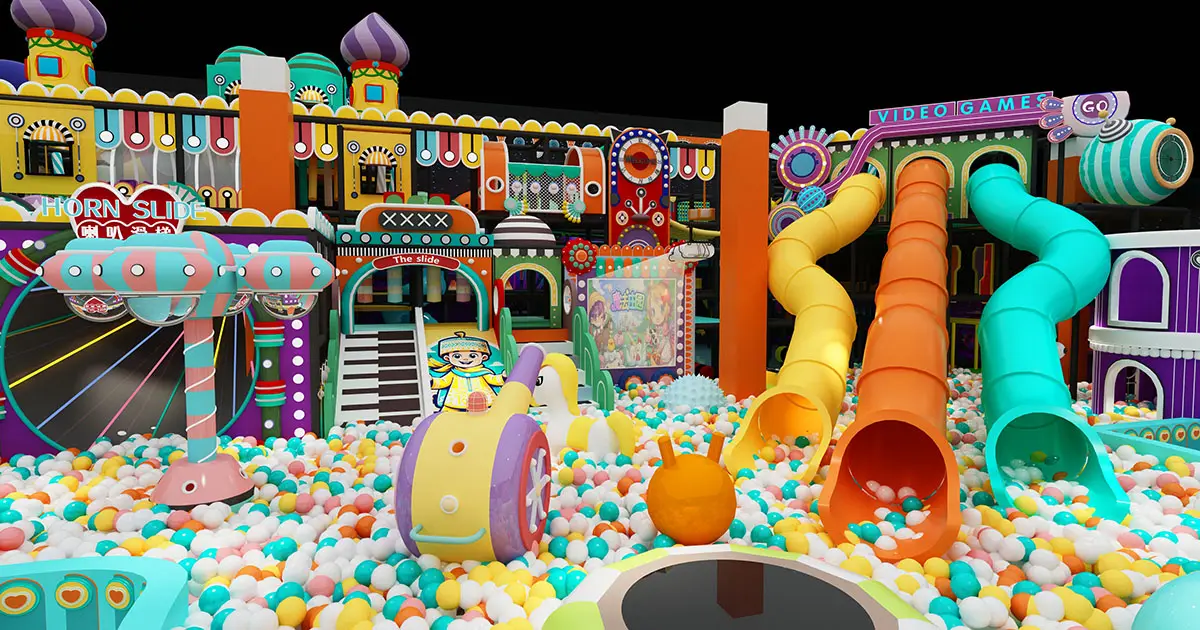
- Premium Mid-Sized Venues (approx. 2,000 – 8,000 sq. ft. / 200 – 800 ㎡): This is currently a highly flexible size with an exceptional ROI. In this space, you can not only feature interactive sandpits and role-play houses for toddlers, but you also have ample room to design a massive 2-to-3-level play structure complete with spiral slides, huge ball pits, and obstacle courses. This scale keeps rent manageable while offering massive play value through vertical equipment integration, making it perfect for high-density residential areas focused on high-frequency visits.
- Large-Scale FECs (10,000+ sq. ft. / 1000+ ㎡): Designed as “destination” entertainment hubs for the city. Beyond standard play structures, you have the space to introduce high-energy, extreme attractions like indoor zip lines, trampoline parks, and ninja courses. You can also build out spacious dining areas and multiple private birthday party rooms to maximize your foot traffic and revenue ceiling.
Step 3: Find the Perfect Location (The Make-or-Break Strategy)
Location is everything. Do not rush to sign a lease just because the price per square foot is cheap. You must evaluate the commercial potential of the space:
- Visibility and Organic Foot Traffic: The ideal venue should be anchored near “big box” stores (like major supermarkets, maternity stores, or popular family restaurants), which naturally draw in your exact target demographic.
- Ceiling Clearance (Crucial): This is a strict requirement for indoor playgrounds! Commercial play structures typically require a vertical clearance of at least 15 to 20 feet (4.5 to 6 meters) to maximize vertical space and boost your ROI.
- Parking and Accessibility: Parents pushing strollers with multiple kids will not walk three blocks. Ample, free, and safe parking is a non-negotiable requirement.
💡Leban Play Expert Insight (Avoiding Pitfalls):
Among the many clients we’ve worked with, a common mistake before finding us is focusing only on the “building height” provided by the landlord, while ignoring the “usable ceiling clearance.” We recently had a client who almost leased a beautiful space advertised with a 20-foot ceiling. However, when the Leban Play engineering team stepped in to evaluate the architectural blueprints, we quickly discovered that a dense network of fire sprinkler pipes and massive HVAC ducts occupied nearly 5 feet of that space. Thanks to our early intervention, the client avoided signing a long-term lease for a building that couldn’t fit their desired 3-level super slide.
Step 4: Navigate Business Licenses and Compliance
Operating a commercial space for public entertainment means compliance is your first step. While local laws vary, you will generally need to secure the following core permits:
- General Business License: The fundamental permit required to operate legally in your local area.
- Zoning & Building Permits: Ensures the property is legally zoned for “indoor recreation” or “public assembly.” Changing the designated use of a retail space often requires city council approval.
- Fire Department Approval: Your layout, emergency exits, and sprinkler systems must pass rigorous fire marshal inspections.
- Amusement/Entertainment Permit: Certain jurisdictions require specialized operational licenses for venues housing large-scale play structures.
- Food & Beverage License: Mandatory if you plan to serve fresh coffee, hot food, or pre-packaged snacks within your playground.
Step 5: Bring Your Vision to Life – Strategic Space Layout & 3D Design
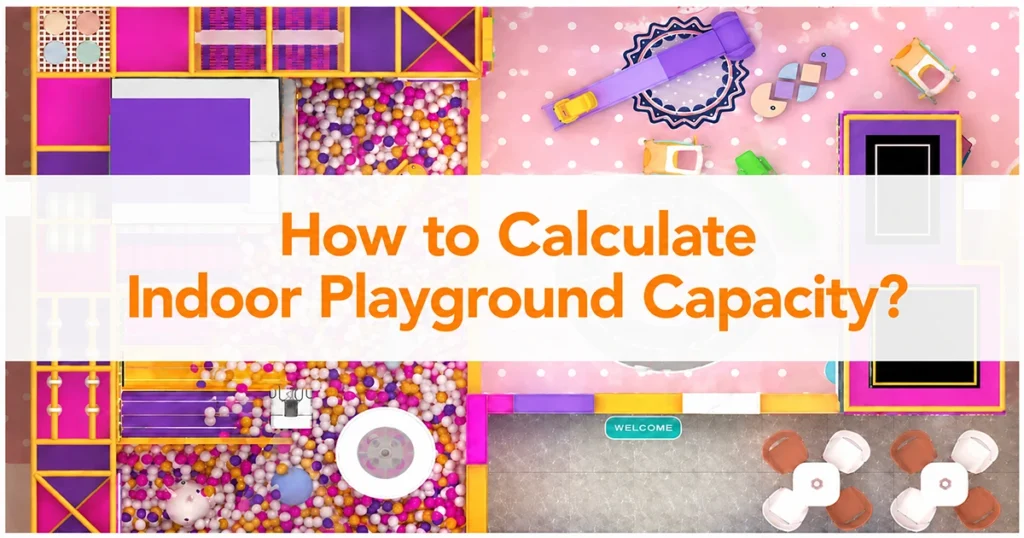
A brilliant playground layout is not just about throwing equipment together; it is a calculated design based on operational efficiency, safety, and maximum guest throughput. We call this “Revenue-Driven Design.”
- Allocate High-Profit Zones: You must designate revenue-generating areas during the initial design phase. For example, birthday party rooms should be placed where they offer privacy yet are easily accessible for staff delivering food. The cafe/lounge area should occupy the “strategic high ground” of the venue.
- Line of Sight & Cost Reduction: An excellent layout allows parents to sit in the lounge and clearly see their kids playing on the equipment. This drastically improves the parent experience and significantly lowers your operational costs by reducing the need for floor staff to monitor blind spots.
- Strict Age Zoning: Older kids running around pose a major safety hazard to toddlers. You must design a physically separated “Toddler Zone” (ages 0-3), located in a quiet corner near the parents and away from high-energy attractions.
💡 Exclusive Customization & 100% Free 3D Renderings
At Leban Play, this is our core advantage. We are not just equipment manufacturers; we are your commercial space planners. We know that guesswork is unacceptable for a project worth hundreds of thousands of dollars. Therefore, we provide our clients with 100% FREE 3D rendering designs. Our engineers use your venue dimensions and revenue goals to calculate how to scientifically arrange equipment and party rooms within your footprint, maximizing your ROI and shortening your payback period.
Step 6: Professional Manufacturing and On-Site Installation
There is an industry saying: “The equipment is only as good as its installation.” Even the best design blueprints pose severe safety risks if assembled improperly.
- Adhere to Safety Standards: Ensure all purchased equipment strictly complies with international safety norms like ASTM (USA) or EN (Europe), and that materials are fire-retardant, non-toxic, and commercial-grade.
Leban Play Professional Installation Team: To guarantee that the final result perfectly matches the 3D blueprints and meets the highest safety benchmarks, Leban Play offers professional overseas on-site installation services. We dispatch experienced engineers and installation crews directly to your venue to guide construction and assemble the equipment, giving you complete peace of mind.
Step 7: Diversify Your Revenue Streams (Operational Monetization)
Once your space is planned, you need to build a diversified ecosystem of income streams. Never rely solely on “open play” admission tickets:
- Birthday Parties & Private Buyouts: Fully utilize the party rooms you designed in Step 5. Sell comprehensive packages that include food, venue space, and decorations. This is your highest profit-margin sector.
According to data from industry authorities like IAAPA (International Association of Amusement Parks and Attractions) and the operational feedback of our successful FEC clients, weekend “birthday parties and private buyouts” typically account for 30% to 50% of the total monthly revenue for indoor playgrounds targeting children. Never treat party rooms as an afterthought—from day one of design, they should be your core profit engine to accelerate your ROI and drive repeat business!
- Cafe & Retail: Offer premium coffee and healthy snacks, and sell branded grip socks or other merchandise to significantly boost your average transaction value.
- Membership Programs: Launch monthly or quarterly passes to secure predictable, recurring cash flow during slower weekday mornings.
Step 8: Targeted Marketing and Pre-Launch Hype
Do not wait until your ribbon-cutting ceremony to start marketing. You must build anticipation in your local community months in advance:
- Hyper-Local Social Media Ads: Fully leverage the local ad capabilities of Facebook, Instagram, and TikTok. Target these ads strictly within a 5-to-10 mile radius of your venue, specifically reaching audiences tagged as “parents,” to achieve exceptionally high conversion rates.
- Pre-Launch Posts & Early Bird Sales: Share your 3D design renders and construction progress on social media. Launch “Early Bird Founding Member” discounts or “Share to Win a Free Party” giveaways to build a massive follower base and generate cash flow before you even open.
- Host a Soft Opening: Invite local family influencers and parenting bloggers for a free preview day to share their experiences. Leverage genuine word-of-mouth reviews to explode your foot traffic on your official grand opening day.
Ready to Launch Your Playground Business?
Starting an indoor playground is a highly complex but incredibly rewarding venture. From initial demographic research and navigating zoning laws to the final equipment installation, every detail matters. The most crucial step is partnering with a direct manufacturer who understands both the hardware and the business logic behind it.
Contact the Leban Play team today! Claim your FREE custom 3D design, and let our professional installation team help you build the most popular indoor playground landmark in your city!